
In a development that has surprised many students, education consultants, and immigration advisors, the Manitoba Institute of Trades and Technology (MITT) has announced that it will permanently shut down its operations.
The news has quickly spread among international students, especially those who were planning to pursue trade programs, healthcare support courses, and technical diplomas in Canada. For many, this raises an important question: how could a public institution close its doors so suddenly?
To understand the situation, it’s important to look at the changes happening in Canada’s international education system and the challenges some institutions are currently facing.
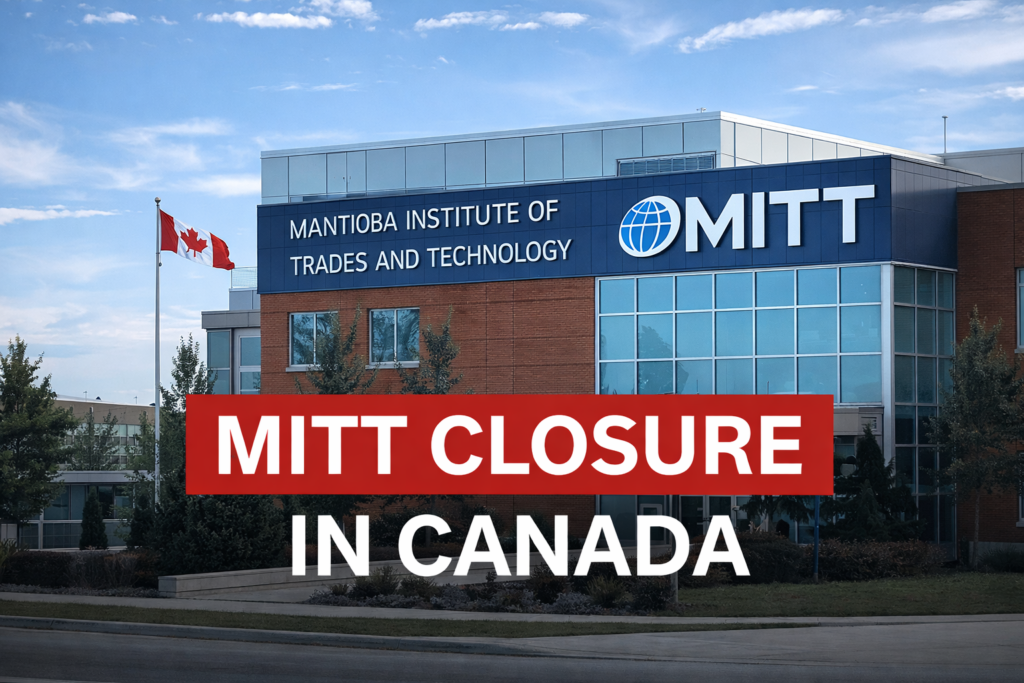
About Manitoba Institute of Trades and Technology (MITT)
The Manitoba Institute of Trades and Technology, commonly known as MITT, is a public post-secondary institution located in Winnipeg, Manitoba.
The college has been known for offering practical and career-focused programs in areas such as:
- Skilled trades
- Healthcare support programs
- Business and technology courses
- Short-term diploma and certificate training
Over the years, MITT attracted both domestic and international students who wanted job-oriented training and faster entry into the workforce.
Because of its practical programs and shorter study duration, the institute became particularly popular among international students looking for career pathways in Canada.
Main Reason Behind the MITT Closure
One of the biggest factors behind the closure is the recent policy changes affecting international students in Canada.
Over the past two years, the Canadian government introduced several reforms to manage the rapid growth in international student numbers. These changes were introduced by Immigration, Refugees and Citizenship Canada (IRCC) to address issues such as housing shortages, rising living costs, and pressure on public services.
As part of these changes:
- Study permit approvals were significantly reduced
- Provincial limits were introduced for international students
- Colleges and universities received restricted allocations for new admissions
These measures have had a direct impact on institutions that depended heavily on international student enrollments.
Financial Pressure on Smaller Institutions
Large universities often have multiple sources of funding, including government support, research grants, and domestic tuition fees.
However, many smaller colleges rely heavily on international tuition revenue to sustain their operations.
Institutions like MITT typically depend on:
- International student tuition fees
- Short-term diploma and certificate programs
- Workforce training partnerships
When international admissions declined sharply, the institute faced a major revenue gap. Reports suggest that international student enrollment dropped by more than half in a relatively short period of time.
Without sufficient revenue to support programs, staff, and facilities, the college eventually determined that continuing operations under the current conditions would no longer be financially viable.
What Happens to Current Students?
Naturally, one of the biggest concerns is the future of students who are already enrolled at the institution.
According to available information, current students are not expected to be left without options.
The transition plan is expected to include:
- Allowing currently enrolled students to complete their programs
- Transferring some courses or programs to other institutions within Manitoba
- Possible support from nearby institutions such as Red River College Polytechnic
While details may continue to develop, the priority is to ensure that students can finish their studies without major disruption.
However, new admissions into the institute are effectively expected to stop.
A Turning Point for Canada’s Education Sector
The closure of MITT highlights a broader issue within Canada’s education system.
For many years, international students have played a major role in supporting college funding while also contributing significantly to the Canadian economy. Their tuition fees often help institutions expand programs and infrastructure.
However, rapid growth in international student numbers also created challenges, including:
- Housing shortages in major cities
- Increased pressure on job markets
- Strain on public services and infrastructure
As a result, the Canadian government introduced stricter limits to stabilize the system.
Institutions that had expanded rapidly based on international student demand are now facing the financial consequences of these policy changes.
MITT may be the first public institution to close permanently due to these pressures, but education experts are closely watching the situation to see whether other smaller colleges could face similar difficulties in the future.
What This Means for Future International Students
For students planning to study in Canada, this situation highlights the importance of carefully selecting institutions and programs.
Before applying, students should consider:
- Choosing recognized and stable institutions
- Verifying that programs meet study permit requirements
- Staying updated with latest immigration policies and government announcements
Canada remains one of the world’s top destinations for international education, but the system is clearly going through a period of policy adjustments and restructuring.
Being well-informed can help students make better decisions and avoid unexpected complications.
Final Thoughts
The closure of the Manitoba Institute of Trades and Technology marks an important moment in Canada’s education landscape.
While the decision reflects the financial realities faced by some institutions, it also highlights how quickly policy changes can reshape the international education sector.
For students and advisors alike, the key takeaway is simple: staying informed and choosing the right institution has never been more important.
If you are planning to study abroad and need guidance with universities, test preparation, or student visa applications, professional guidance can help you navigate the process with confidence.